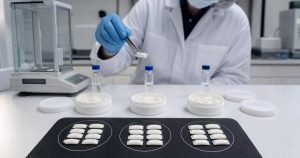
Learn how to read a caffeine pouch COA, match lot numbers, verify caffeine milligrams, review test methods and spot incomplete batch documents.
A COA should identify one specific batch
A useful Certificate of Analysis links the result to a product name or code, batch or lot number, manufacturing date and test date. Those details should match the finished cans, shipping documents and retained samples. A generic ingredient certificate or an undated marketing PDF is not a substitute for a batch-specific finished-product record.
Compare the result with the approved specification
For each test, look for the specification, numerical result, unit and pass/fail conclusion. Caffeine may be reported per pouch, per gram or as a percentage; these units are not interchangeable. If the label states milligrams per pouch, confirm how the laboratory converted concentration using actual fill weight and whether the acceptance range is defined.
Understand the method and laboratory
The report should identify the test method, such as a validated chromatographic method for caffeine, and the laboratory that performed it. Ask whether the method is suitable for the finished pouch matrix rather than only raw caffeine powder. Accreditation can support laboratory competence, but buyers still need to check scope, sample identity and chain of custody.
Look beyond caffeine potency
The appropriate panel depends on formula, market and risk assessment. It may include microbiological limits, moisture or water activity, heavy metals, identity of selected ingredients, pouch weight and other agreed quality attributes. Not every test belongs on every COA, but omitted high-risk items should be supported by a documented control plan.
Red flags that need clarification
Watch for missing lot numbers, copied results repeated across batches, units that do not match the specification, values reported only as “pass,” unexplained corrections, unsigned approval, cropped pages or results outside the stated limits. Ask for the original report, method reference and investigation where needed. A COA supports due diligence; it does not replace supplier qualification, audits and incoming checks.
Frequently asked questions
Is a raw caffeine COA enough for finished pouches?
No. It verifies the ingredient lot, while the finished product also needs evidence for dose uniformity and relevant finished-product specifications.
What does mg per pouch mean on a COA?
It is the measured or calculated caffeine quantity for one pouch; confirm the sampling and conversion method.
Does a COA prove regulatory approval?
No. It reports test results and does not by itself establish product approval or market compliance.
{“@context”: “https://schema.org”, “@type”: “FAQPage”, “mainEntity”: [{“@type”: “Question”, “name”: “Is a raw caffeine COA enough for finished pouches?”, “acceptedAnswer”: {“@type”: “Answer”, “text”: “No. It verifies the ingredient lot, while the finished product also needs evidence for dose uniformity and relevant finished-product specifications.”}}, {“@type”: “Question”, “name”: “What does mg per pouch mean on a COA?”, “acceptedAnswer”: {“@type”: “Answer”, “text”: “It is the measured or calculated caffeine quantity for one pouch; confirm the sampling and conversion method.”}}, {“@type”: “Question”, “name”: “Does a COA prove regulatory approval?”, “acceptedAnswer”: {“@type”: “Answer”, “text”: “No. It reports test results and does not by itself establish product approval or market compliance.”}}]}
Sources and business note
Testing, labelling and market requirements vary. Obtain qualified regulatory and quality advice for the intended country and product category.