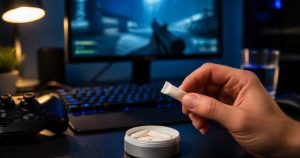
A low-dose, sleep-aware approach to afternoon fatigue for office workers who want no brew, no cup and no sugar drink
First check what the slump is telling you
Mid-afternoon fatigue can follow a short night, heavy lunch, long sitting period, warm room or natural circadian dip. Before adding caffeine, try water, daylight, a short walk and a change of task. Caffeine may temporarily improve alertness, but it does not correct chronic sleep restriction.
If fatigue is persistent, unusual or severe, treating it repeatedly with stimulant products can hide a problem that deserves professional attention.
Why a mild labelled dose is usually the better fit
A 50–75 mg pouch provides more room in a daily caffeine budget than 150–200 mg. Many adults do not need a high dose for ordinary desk fatigue, and later dosing has a larger chance of interfering with sleep. Start with the lowest available option rather than selecting by maximum strength.
Count the morning coffee, tea at lunch, cola, chocolate, pre-workout and medication. A “small” afternoon pouch can take a day unexpectedly close to the total reference level.
Set an afternoon cutoff
Work backward from bedtime. Because caffeine half-life is often several hours, a 3 PM dose may still leave caffeine in the body at night. EFSA notes that 100 mg close to bedtime can affect sleep in some adults. Sensitive users may need an earlier cutoff or a caffeine-free afternoon plan.
Track sleep onset and quality on days with and without the pouch. If bedtime moves later or sleep feels lighter, reduce the dose or move it earlier.
A practical office routine
Eat a balanced lunch, take a brief daylight walk, hydrate and reassess. If caffeine is still appropriate, check today’s total, use one low-strength intact pouch for the labelled duration and wait before considering anything else. Rotate placement and stop for persistent irritation.
The discreet format avoids brewing, spills and a sugary drink, but it should remain an occasional tool inside a sleep-supportive routine—not an automatic 3 PM habit.
Frequently asked questions
Are caffeine pouches nicotine-free?
A pure caffeine pouch can be formulated with zero nicotine and zero tobacco. Always confirm the specific ingredient list.
Is 400 mg a target dose?
No. FDA cites 400 mg per day from all sources as an amount not generally associated with negative effects for most adults; it is not a personal target.
Are caffeine pouches for minors?
No. Adult caffeine products should be kept away from children and pets.
Is 50 mg considered mild?
It is a lower strength than many coffee servings, but sensitivity varies and even 50 mg may affect sleep in some people.
{“@context”: “https://schema.org”, “@type”: “FAQPage”, “mainEntity”: [{“@type”: “Question”, “name”: “Are caffeine pouches nicotine-free?”, “acceptedAnswer”: {“@type”: “Answer”, “text”: “A pure caffeine pouch can be formulated with zero nicotine and zero tobacco. Always confirm the specific ingredient list.”}}, {“@type”: “Question”, “name”: “Is 400 mg a target dose?”, “acceptedAnswer”: {“@type”: “Answer”, “text”: “No. FDA cites 400 mg per day from all sources as an amount not generally associated with negative effects for most adults; it is not a personal target.”}}, {“@type”: “Question”, “name”: “Are caffeine pouches for minors?”, “acceptedAnswer”: {“@type”: “Answer”, “text”: “No. Adult caffeine products should be kept away from children and pets.”}}, {“@type”: “Question”, “name”: “Is 50 mg considered mild?”, “acceptedAnswer”: {“@type”: “Answer”, “text”: “It is a lower strength than many coffee servings, but sensitivity varies and even 50 mg may affect sleep in some people.”}}]}
Sources and responsible-use note
- U.S. FDA: How Much Caffeine Is Too Much?
- EFSA: Caffeine safety assessment
- PubMed: caffeine gum absorption compared with capsules
This article is educational, not medical advice. Caffeine response varies with sensitivity, body size, sleep, medications and health conditions. Count caffeine from every source, follow the label and ask a qualified professional for individual guidance.