By CaffeinePouches.cc editorial team · Reviewed November 16, 2026 · Buyer education
A useful product complaint identifies the exact can, what happened and when. For a private label brand, those details let the quality team distinguish a packing problem, a possible batch issue and a health report that requires prompt attention.
Separate the immediate response from the investigation
If a pouch appears damaged or causes an unexpected reaction, stop using the affected product. Seek appropriate medical care for health concerns; urgent symptoms such as trouble breathing or chest pain need urgent help. A customer should not be asked to try another pouch to reproduce a reaction.
For US products classified as dietary supplements, FDA explains how consumers and industry can report adverse events. Product classification and the destination market determine the applicable reporting route and obligations. A quality investigation or refund should not delay a required safety report.
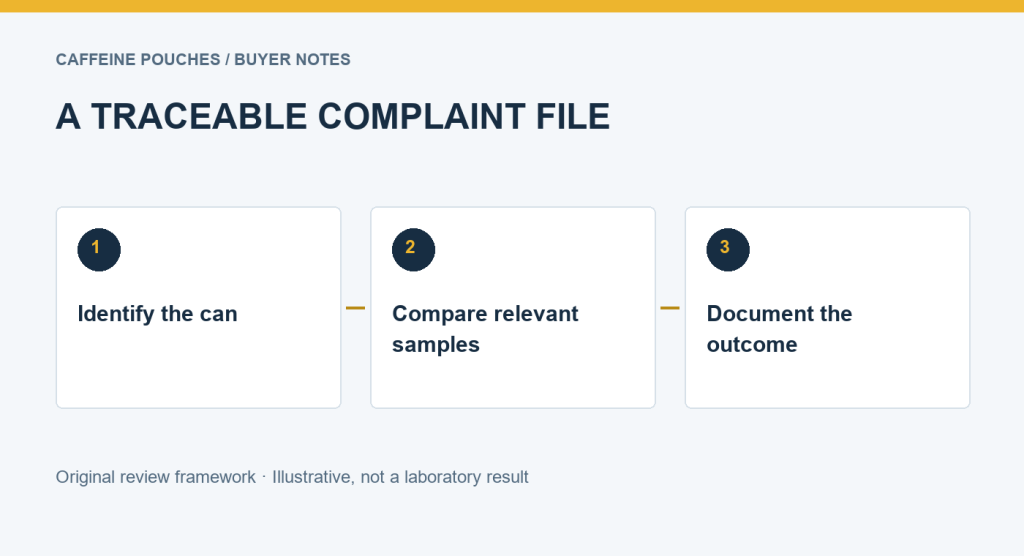
Collect enough detail to find the affected product
A photograph of the front of the can may identify a brand but miss the lot code. Ask for the bottom, side label and outer packaging where relevant. Keep the original message and attach follow-up information to the same case. Do not rewrite an uncertain account as a confirmed manufacturing defect.
A complaint intake checklist
- Product name, flavor, strength, can count, lot code and date markings.
- Seller, order reference, purchase date and country.
- When the can was opened and when the issue was noticed.
- A plain description: split seam, loose fill, unusual odor, count discrepancy or unexpected reaction.
- Photographs of the product and package, without unnecessary personal information.
- Whether an unused sample remains, and how it has been stored.
- A contact method and permission for the appropriate team to follow up.
Health details need careful handling. Collect information necessary for safety follow-up through a suitable private channel, not a public review thread. Record other products or caffeine sources only where relevant to that assessment. The customer’s observation is evidence of a report; determining its cause is a separate task.
Choose a comparison that can answer the question
For a split seam, examine the returned material if suitable, unopened units from the same lot and the manufacturer’s retained sample if one exists. Review relevant packing checks and deviations. An unopened retained sample can help evaluate the condition at manufacture; it cannot reproduce every transport or storage event experienced by the customer’s can.
Record any differences between the samples before testing. A used or dried pouch may be unsuitable for interpreting original moisture, flavor or caffeine content. Ask the laboratory which question the sample can answer, how it should be packaged and what documentation should accompany it. Do not promise a definitive cause from a photograph alone.
Use counts with a clear denominator
Suppose a fictional brand receives four seam complaints associated with 20,000 cans shipped from one lot. That is 0.02% reported complaints per can shipped. It is not the defect prevalence: some cans may be unopened, and some customers may not report a problem. Record the period, unit and number of affected pouches where known. Do not compare this figure with another lot’s percentage of pouches failing a factory test as if the denominators matched.
Close the case with a documented decision
The investigation record should state what was checked, what was found and what remains uncertain. If a cause is supported, connect the corrective action to that cause and assign a follow-up check. If it remains inconclusive, say so and explain what information was unavailable. “Could not reproduce” does not erase the original customer report.
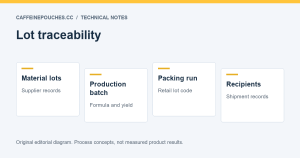
Agree complaint ownership in the manufacturing arrangement before launch: who receives reports, who assesses safety escalation, who supplies batch records and who communicates with the customer. Product disposition, regulatory reporting and any recall decision belong to the responsible qualified parties. Our lot traceability guide explains the records used to identify affected shipments.
Frequently asked questions
Should a customer mail a used pouch back immediately?
Ask the responsible support team for handling and shipping instructions first. Keep available packaging and photographs; do not assume a used sample is suitable for every laboratory test.
Does an intact retained sample rule out a customer complaint?
No. It provides one comparison. The investigation must account for sampling limits and the conditions experienced by the reported product.
Is a refund evidence that the cause has been found?
No. A commercial remedy and a technical conclusion are separate decisions. Record both without presenting one as proof of the other.
References and scope
This article provides a purchasing review framework. It does not certify a particular batch, establish clinical efficacy, or confirm permission to sell in a particular market.
For a project review, send the target market, proposed ingredient list and pack format through our contact page. See the buyer question center for related questions.