
An unfamiliar odor in a pouch can originate outside the formula. Printing inks, coatings, labels and adhesives are possible investigation targets. Keep the complaint can intact where possible and compare each packaging layer before attributing the problem to caffeine or flavor quality.
Editorial scope: technical development and supplier review. Published 16 November 2026. The study and control suggestions below are not reported results from this supplier.
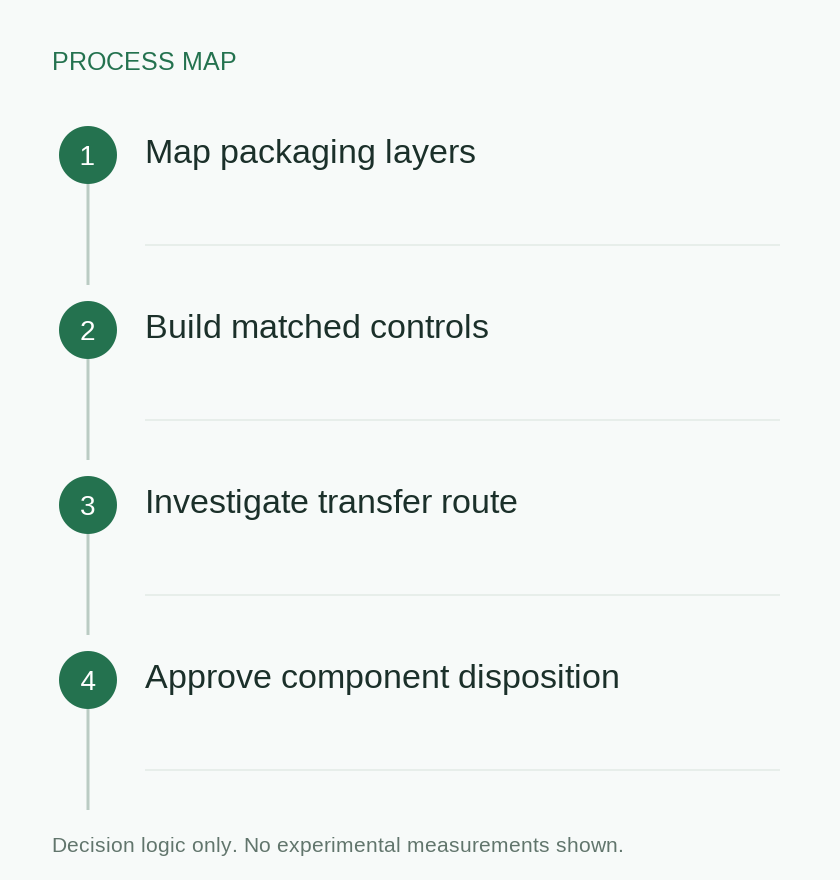
Map direct and indirect contact
List the can body, lid, liner, label, ink, coating and any secondary wrap. A material printed on the outside can still matter through set-off, storage contact or volatile transfer. Obtain the exact supplier codes and print revision. A generic food-contact statement for resin does not describe every ink and adhesive used in the final pack.
Design controls that isolate the source
Compare filled printed cans, filled unprinted equivalents and packaging blanks under the same storage conditions. Retain the intended curing and storage history of printed parts. If analytical testing is needed, select methods and target compounds with a competent packaging laboratory. An odor panel can locate a change, but it does not quantify a migrant or establish toxicological acceptability.
Control substitutions after approval
An apparently minor label adhesive or ink change can invalidate a previous compatibility comparison. Define notification and approval requirements in the purchasing specification. Quarantine suspect components while evaluating the affected interval. Masking an unexplained packaging odor with stronger flavor leaves the underlying issue unresolved and may complicate the investigation.
Development review checklist
- Record component, ink and adhesive identifiers.
- Retain printed and unprinted packaging controls.
- Check curing, stacking and storage records.
- Separate sensory assessment from migration and safety evaluation.
- Require approval for changes to the complete contact system.
Buyer questions
Does food-grade plastic cover the printed label too?
Not automatically. The complete material system and intended contact conditions need review.
Can odor prove that a pack is unsafe?
Odor is a signal to investigate, not a quantitative safety conclusion.
Why keep an empty printed can as a control?
It helps distinguish packaging-origin odor from changes generated by the filled formula.
Can a supplier substitute an equivalent adhesive?
Equivalence should be demonstrated against the approved specification and change-control agreement.
Should a stronger flavor be used to hide an off-odor?
No. Identify and assess the source before considering formulation changes.
What should accompany a packaging complaint?
Lot codes, print revision, photographs, storage history and retained components, without discarding the original evidence.
References and scope
- FDA: Small Entity Compliance Guide, Dietary Supplement CGMP
Specifications and production records where dietary-supplement classification applies; not automatic classification of every oral pouch.
- FDA: ICH Q2(R2), Validation of Analytical Procedures
Fit-for-purpose analytical validation framework; pharmaceutical guidance used as technical background, not a certification for these products.
Discuss the specification and evidence needed for your project. Send the intended use, destination market and the attribute you need to verify. Commercial capability and acceptance criteria require a project-specific agreement.