
A can can lose its mint character while its caffeine assay remains unchanged. Caffeine content and volatile flavor retention need different measurements. A development review should identify which attribute changed before adjusting active content or promising a longer-lasting sensation.
Editorial scope: technical development and supplier review. Published 16 November 2026. The study and control suggestions below are not reported results from this supplier.
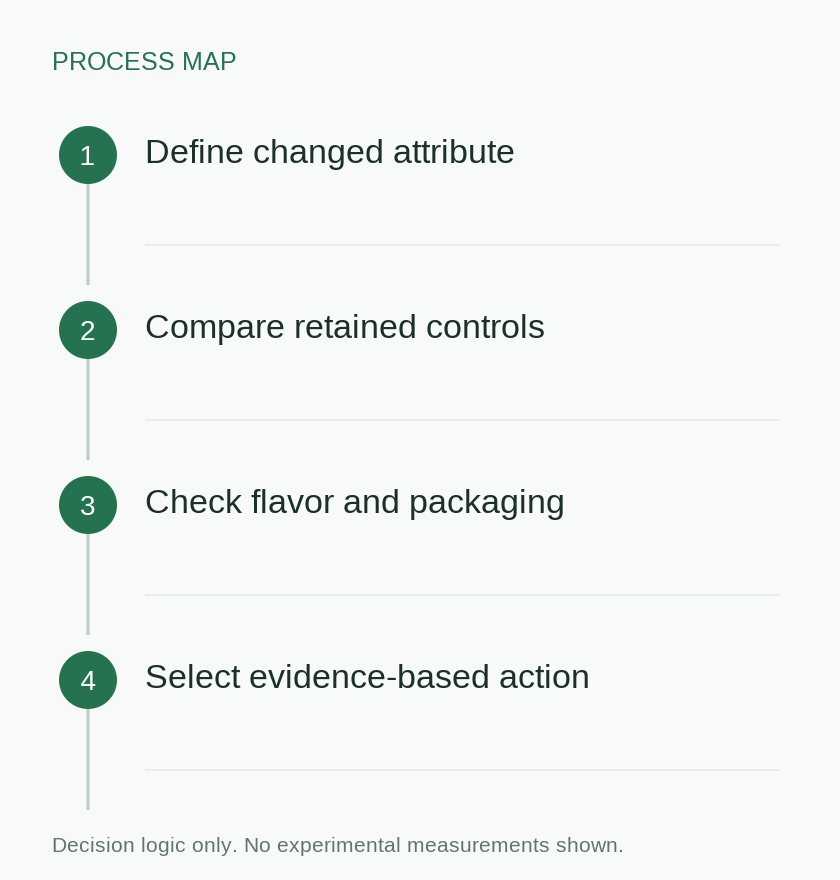
Separate the complaint into measurable attributes
Record whether the problem is odor on opening, flavor during contact, cooling intensity or chemical content. Retain an unopened comparison can from the same lot. Examine closure history and storage exposure before blaming the raw flavor. A caffeine assay is not a measurement of mint volatiles, and an intense aroma is not evidence of a higher caffeine amount.
Build a targeted comparison
Use an appropriate analytical flavor fingerprint or headspace method where it helps answer the question. Sampling temperature, equilibrium time and can headspace must be controlled. Pair analytical observations with a defined sensory assessment conducted under an appropriately reviewed protocol. Compare the proposed commercial packaging, not an open laboratory dish or a substitute container.
Choose the corrective action that matches the failure
A closure leak, sorption into a liner and chemical change in the flavor system require different remedies. Evaluate packaging compatibility and oxygen or moisture exposure alongside the flavor ingredients. Reformulation should follow change control, including caffeine and other affected tests. Do not compensate for a stale aroma by raising caffeine or an irritant cooling agent.
Development review checklist
- Preserve complaint and reserve cans separately.
- Define the flavor attribute and its measurement.
- Standardize headspace sampling conditions.
- Compare the same formula in candidate contact materials.
- Retest relevant chemical and physical attributes after a change.
Buyer questions
Can caffeine stay stable while flavor changes?
Yes, the measured attributes are different. A stable caffeine result cannot establish flavor retention.
Does a stronger opening aroma mean a better pouch?
Not necessarily. Opening aroma and in-use preference need separate assessment.
Why test a can liner in a flavor investigation?
Contact materials may affect flavor retention or introduce odor. Test the complete packaging configuration.
Can a consumer comment prove oxidation occurred?
It can identify a concern, but a chemical mechanism needs supporting evidence.
Should every volatile be measured?
Select markers appropriate to the flavor and the decision. An untargeted list without a comparison plan may not resolve the complaint.
References and scope
- FDA: ICH Q2(R2), Validation of Analytical Procedures
Fit-for-purpose analytical validation framework; pharmaceutical guidance used as technical background, not a certification for these products.
- FDA: Small Entity Compliance Guide, Dietary Supplement CGMP
Specifications and production records where dietary-supplement classification applies; not automatic classification of every oral pouch.
Discuss the specification and evidence needed for your project. Send the intended use, destination market and the attribute you need to verify. Commercial capability and acceptance criteria require a project-specific agreement.